Choosing a cataract surgeon is a big decision. Not only are you entrusting a person to perform intricate surgery on one of your most precious organs, but there are also many different intraocular lenses (IOLs) to choose from. Even in 2025, with cataract technology at an incredibly advanced stage, not all cataract surgeons are equipped with the training and equipment to take full advantage of everything on offer.
This makes it essential to approach your upcoming operation armed with some essential information. Knowledge, as the saying goes, is power… Understanding a little about the procedure allows you to prepare the best eye doctor questions for your situation. These are driven by some important factors:
With all this in mind, you can drill down the right list of questions to ask your eye doctor. The answers you receive will drive your final decision as to which surgeon you choose.
Q1: Ask about experience, success rate, and outcomes.
Not all surgeons are made equal. While all cataract surgeons have undergone extensive training, specialist clinicians might perform upwards of hundreds per week. This is in contrast to those who only spend a few days a month concentrating on this area. As with any skill, the more you do it, the more adept you become. Be sure to ask about their success rate, whether they perform the more advanced laser-assisted cataract surgery, and what lenses they recommend (which brings us neatly onto the next question…)
Q2: What IOLs do they offer?
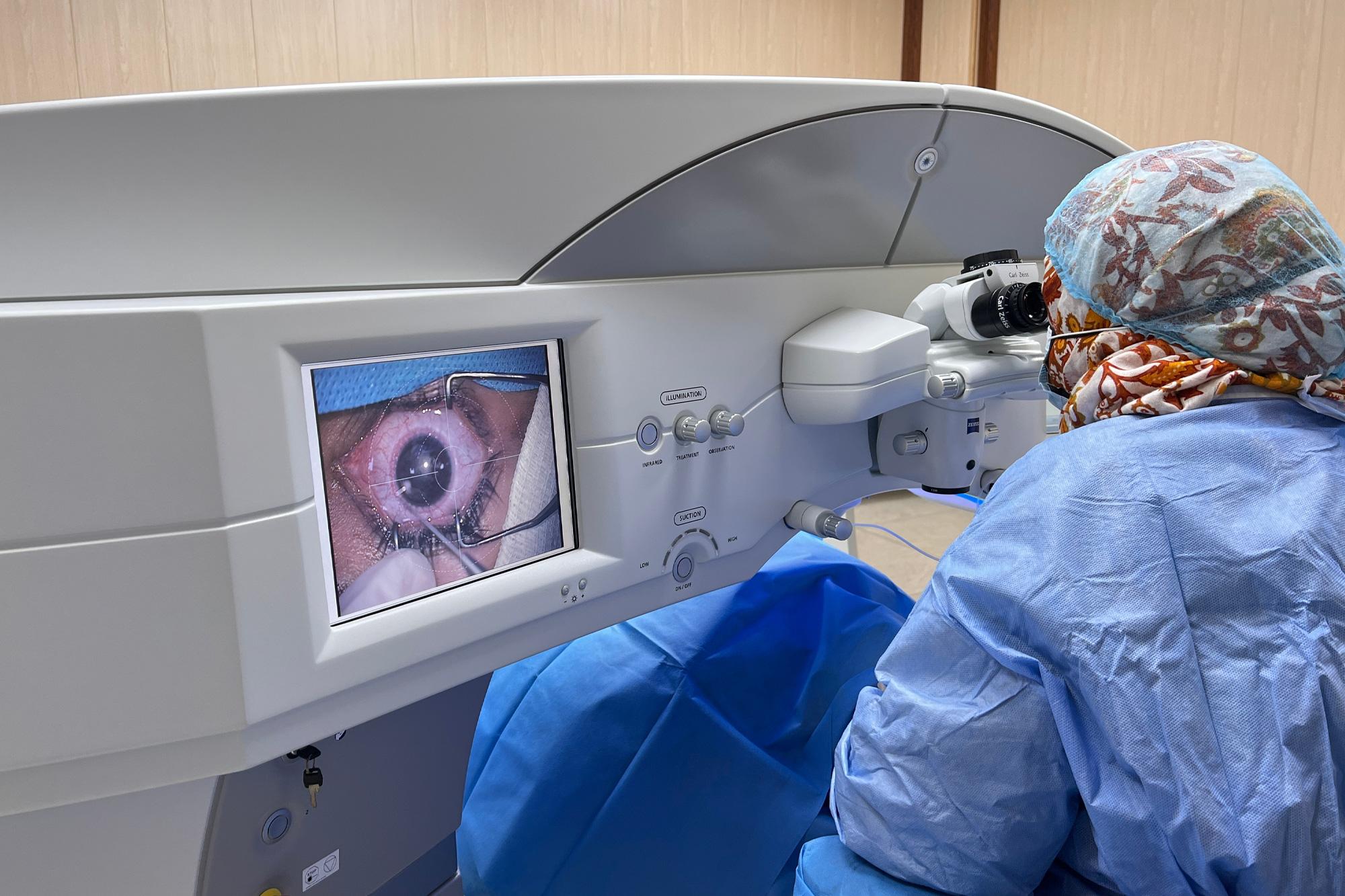
All lenses, apart from a basic monofocal lens, require laser-assisted cataract surgery. You might also hear this called femtosecond laser-assisted cataract surgery (FLACS). Even though this has had FDA approval for over 15 years, less than 50% of surgeons have the training and equipment to do this. Only those who perform FLACS can offer you any type of premium lens.
Q3. Will my operation be covered by Medicare and/or insurance?
These typically only cover the cost of traditional cataract surgery and a monofocal lens. If you’re going to have a premium lens fitted, you’ll probably have to pay the difference for the more advanced procedure. Check that the surgeon is approved by your insurance company/Medicare to ensure that you’re covered (or that you only have to pay the outstanding amount for the more advanced procedure and lens).
Q4: I’ve got diabetes/glaucoma/hypertension/had previous eye surgery (insert any other condition). Are you the best person to perform my cataract operation?
A super important question, as preexisting conditions can dramatically change the risk factors and surgical plan. Be sure to satisfy yourself that your chosen surgeon has the correct experience to treat your individual needs.
Q5: Will I need glasses after surgery?
The type of IOL you have fitted can increase the likelihood of not needing eyeglasses, but no surgeon can guarantee this. They should explain the potential and best-case scenarios, but never promise perfect vision.
Q6: Will I see you throughout my care, or will some aspects be carried out by members of your team?
It’s not an issue to be seen by various people in a specialist cataract surgical team. However, it’s good to know if the surgeon who carries out your cataract consultation prep and operation will be the same clinician who will perform your post-op checks and any further requirements.
Q7: What are the risks, and what if something goes wrong?
Cataract surgery has an incredibly high success rate (98%-99%). But your surgeon should explain all the risks and what procedures are in place should something go awry. This is important for everyone, but especially so if you’re in a higher risk category or have more complex needs.
While this list of questions certainly isn’t exhaustive, it highlights some of the most important (and often lesser asked) queries. Naturally, you should also ask about the actual procedure, recovery times, post-op activity restrictions, and other more general questions too. But a good surgeon should cover this more general information anyway, without you having to probe.
The first step is to create a shortlist of potential cataract surgeons, something that we’ve made easy to do. Head across to https://www.bestcataractsurgeonreviews.com/ for an intuitive system that teams an easy search with real patient review in a single, easy-to-navigate location.